Most condominium landscape contracts come down to one line: "maintain landscape, two workers, six days a week." Then the hedges thin, residents complain, and nobody can say whether the contractor has failed, because nobody wrote down what success was. A clear scope of work fixes that.
Under the Strata Management Act 2013, maintaining and managing the common property is the responsibility of the JMB, and later of the MC once it is formed. The gardens are part of that common property, and they are the one part that is alive. This guide is practical, not legal advice. Have your managing agent or lawyer check the contract itself.
Why vague scopes fail
A headcount buys attendance. Two workers can spend six days sweeping leaves and hosing paths while the soil goes unfed and the irrigation timer quietly dies. Everyone was present. Nothing was maintained.
It also makes quotes impossible to compare. One bidder prices in fertiliser, replacement plants and waste disposal. Another leaves them out and comes in cheaper. The missing items turn up later as extra charges or as dead plants.
Start with what you have
Before any tasks, write down the landscape.
- Areas. Entrance, driveway verges, podium, pool deck, playground, perimeter, sky gardens, lobby pots. Mark them on the site plan and give each a name everyone will use.
- A rough plant inventory. Trees and palms by number, hedges by the metre, lawns, shrub beds, planter boxes, green walls. It need not be botanical. "Fourteen palms along the driveway" is enough.
- The systems. Taps, irrigation zones and timers, drainage outlets.
Specify tasks and frequencies
For each task, state what is to be done and how often. Treat the last column as a starting point, not a standard. Your site and budget decide.
| Task | What to pin down | A common starting point |
|---|---|---|
| Mowing and edging | Which lawns, cutting height, edges trimmed on the same visit, clippings removed | Every two to three weeks. Grass does not stop growing here. |
| Hedge trimming | Each hedge by location, with the height and width to be kept | Monthly for formal hedges, less often for informal ones |
| Pruning of shrubs and palms | Dead fronds, spent flowers, clearance over walkways, signage, lights and CCTV views | Checked monthly, done as needed |
| Fertilising | A written schedule for lawn, shrubs and palms, naming the fertiliser and who supplies it | Every two to three months |
| Pest and disease monitoring | Inspect, report, then treat. Only pesticides registered in Malaysia, used to the label, with notice to management before spraying | Every visit |
| Watering and irrigation | Who waters what in dry spells. Timers, nozzles and leaks checked | Irrigation check monthly |
| Weeding | Beds, paving joints and gravel areas | Every visit |
| Mulching and soil improvement | Beds topped up with mulch or compost, by area | Once or twice a year |
| Green waste, pool deck and drains | Waste taken off site on the day. Pool surround and drain gratings beside planting cleared of leaves and clippings | Every visit |
Tree work
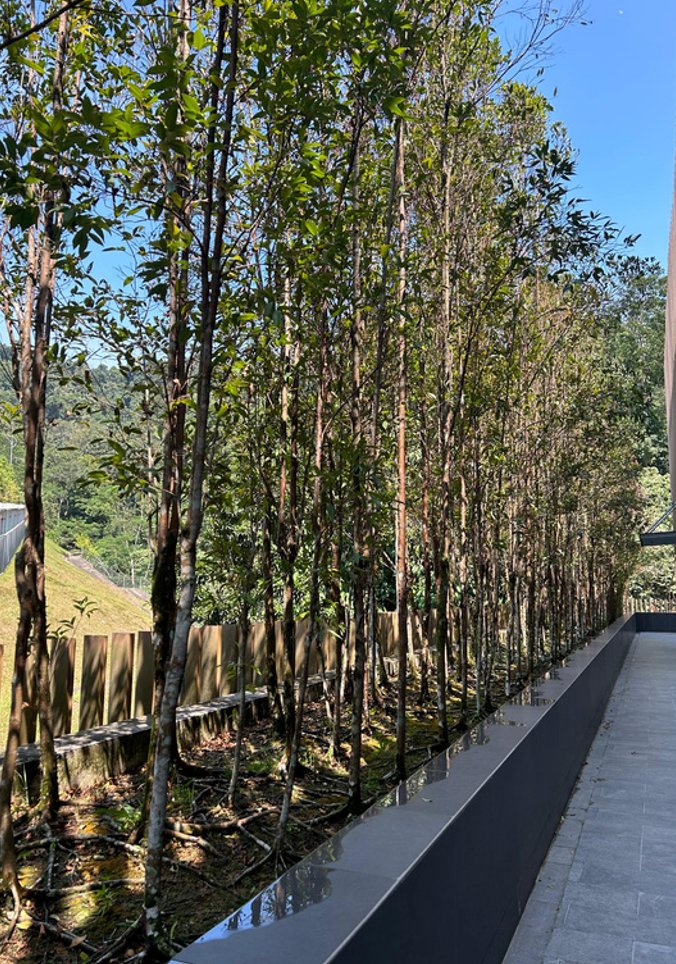
Pruning that can be done from the ground with hand tools belongs in the monthly scope. Anything that needs climbing, a lift or a chainsaw should be quoted job by job and done by people trained and equipped for work at height, with the area below cordoned off. Ask for large trees to be looked over at least once a year and after major storms, with concerns reported in writing.
Dead plants, and who pays
Many disputes start here. A common split: plants that die through the contractor's neglect are replaced at the contractor's cost. Those lost to vandalism, vehicles, building works, storms or old age are replaced at the building's cost, against a schedule of rates agreed in advance. State how quickly a dead plant must be removed and what size of plant counts as a replacement.
Optional items
List festive refreshes, replanting and larger soil improvement works as optional items with their own rates. That keeps the monthly fee honest.
Headcount, outcomes, or both
A headcount is easy to check at the guardhouse and tells you nothing about the garden. An outcome, such as "no dead plants left in place beyond two weeks", describes what residents actually see, but someone has to inspect it. We would write both: outcomes and frequencies first, then a minimum attendance so the site is never left empty.
Reporting you will actually read
- A short photo report after each visit, or each week for daily crews. What was done, what was noticed, what needs a decision.
- A one-page monthly summary the building manager can table at the committee meeting. Work done against the schedule, plant losses, the irrigation check, and recommendations with costs.
- One named contact on each side.
KPIs you can inspect on a walk
Every measure should be something a committee member can check on foot.
- Hedges within the agreed height, with no browning sections left unreported.
- No bare soil in beds. It is planted or it is mulched.
- No dead plants left in place beyond the agreed period.
- Walkways, signage and lights clear of growth.
Walk the site with the contractor's supervisor every month, with last month's report in hand.
Begin with a handover condition survey
On day one, walk the whole site with the incoming contractor and photograph everything. Dead and dying plants, bare patches, broken irrigation, leaning trees. Both sides sign it off. It protects the new contractor from blame for what they inherited, and gives the committee a baseline. Without it, every later argument is one person's memory against another's.
Insurance and safety basics
Ask every bidder for the same documents.
- Company registration.
- Public liability insurance, with a current certificate.
- Evidence that workers are covered, such as SOCSO contributions, and that foreign workers hold valid permits.
- How they work near residents: protective equipment, cones and signs, agreed hours for noisy work.
Contract length and review
Soil and plant health take months to turn around, so a contract of only a few months encourages cosmetic work. A one-year term with a review at the halfway point, a notice period for either side and an option to renew is a common arrangement. Walk the site together before each renewal and update the scope from what you find.
Comparing quotes fairly
- Give every bidder the same written scope, inventory and site plan.
- Hold one site walk for all bidders, so everyone hears the same answers.
- Ask for the price to be broken down: labour, materials, waste disposal, and a schedule of rates for replacement plants and optional items.
- Ask to see a site they maintain now. Visit it on an ordinary weekday.
Red flags
- A quote sent without a site visit.
- A price far below the others, with no explanation.
- No mention of fertiliser, soil or mulch anywhere in the proposal.
- Every problem answered with replacement plants, and no interest in why the last ones died.
A checklist to copy and adapt
- Site plan with named areas, and a plant inventory.
- Every task with a frequency, by area. Hedge and lawn heights stated.
- Fertilising schedule, and who supplies the materials.
- Irrigation checks, and who pays for repairs.
- Mulch and soil improvement, by area.
- Green waste off site on the day. Pool deck and drain gratings kept clear.
- Tree work: what is included, what is quoted separately, a yearly inspection.
- Replacement policy: causes, who pays, time limit, plant size.
- Schedule of rates for replacements and optional items.
- Minimum attendance and hours. Noisy work by agreement.
- Photo reports, a monthly summary, a named contact, a monthly joint inspection.
- Handover condition survey, signed by both sides.
- Insurance, worker coverage and safety documents.
- Term, mid-term review, notice period, renewal walk.
Request a site walk
We look after condominium and commercial landscapes across the Klang Valley, and we are glad to quote against a scope like this one. If you do not have one yet, we can walk the grounds with your building manager, look at what is thriving and what is dying, and help you draft it.
See how we handle condominium landscape maintenance, or go to For Business and request a site walk.